
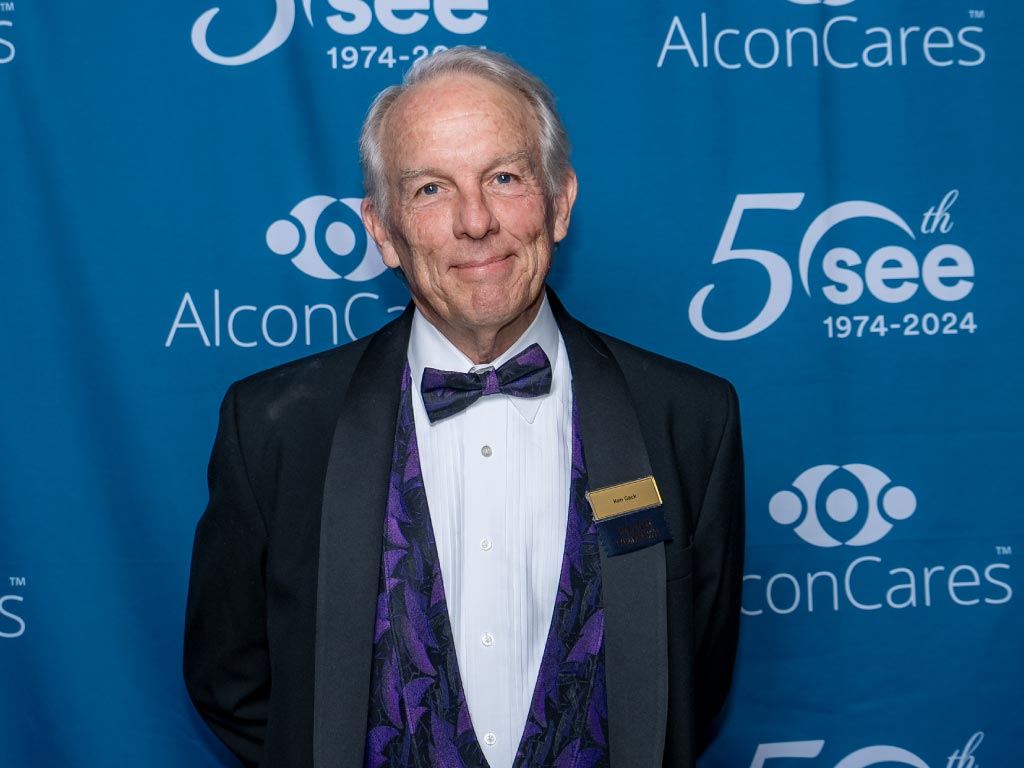
Former board member and longtime friend Ken Gack’s connection to SEE International began with an article 25 years ago.
After spending about two decades practicing litigation law, Ken moved into mediation and arbitration and later joined JAMS, where he has worked for more than 30 years. In 2001, Ken came across a Forbes article featuring our very own founder, Dr. Harry Brown. The story introduced him to SEE International and an approach to eyecare that caught his attention.
“I got involved in SEE when I read an article in Forbes where Harry was on the front cover,” said Ken.
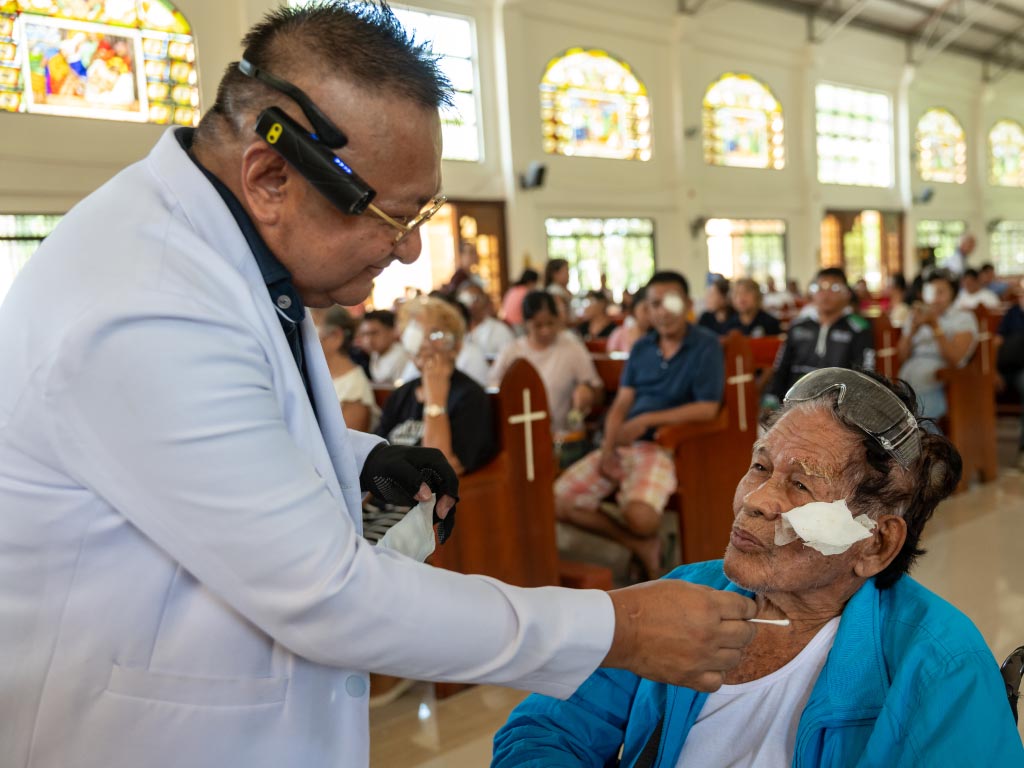
What intrigued him was the immediate change that could happen after a simple cataract surgery.
“People show up blind, they come back the next day, and they can see. So there is immediate, tangible, specific results,” he said.
Ken eventually traveled to Santa Barbara, met Dr. Brown, and began supporting SEE. His involvement grew into what is now 25 years of consistent support. He served on SEE’s board for nearly a decade, and began traveling with our medical teams to volunteer for programs in countries including Ecuador, Bolivia, and Honduras.
Finding a Role in Cataract Surgery Programs
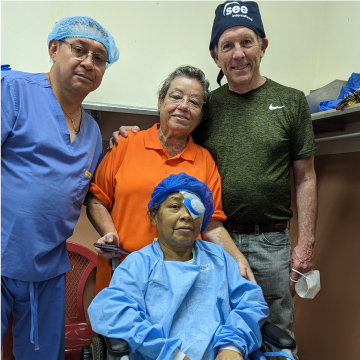
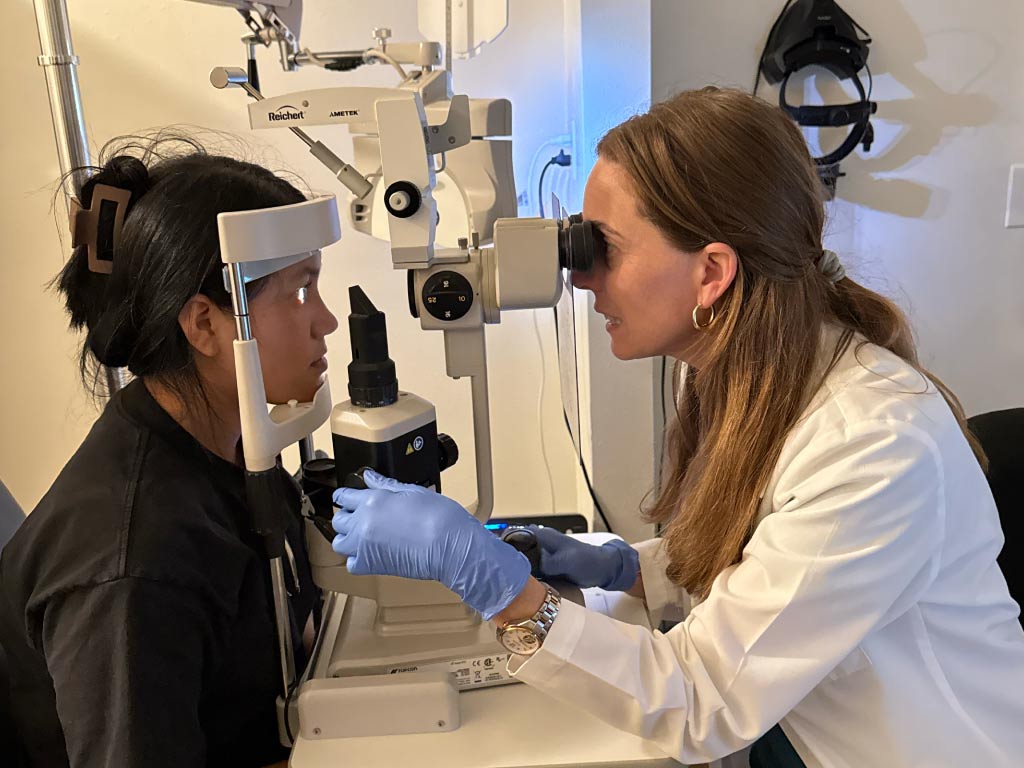
Ken went on his first international program with SEE in 2016. Over the years, he learned how to assist physicians by performing A scans, B scans, and keratometry readings, which aremeasurements that help determine which lens a patient needs during cataract surgery.
“I’ve picked up enough skills that I can make a contribution. I’m a very small cog in a large machine, you know. The doctor drives it all, but I can contribute that way,” said Ken.
But his involvement in SEE’s programs extended beyond the medical team. While serving on the board, Ken turned several of his volunteer trips into fundraisers, reaching out to friends to share what he was doing. His efforts raised more than $50,000 in donations for SEE.
Why He Loves the Work
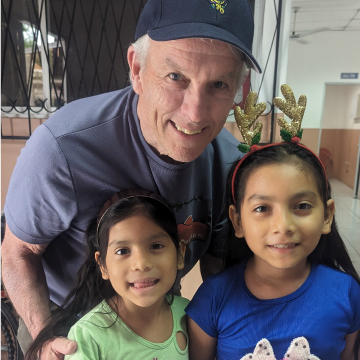
Ken recalls a distinct memory of a patient who received care through SEE’s efforts during a program he attended in Ecuador.
He met a woman who was almost completely blind before surgery. When she returned for her postoperative exam, the difference was striking. Someone who had initially come to the clinic unable to see a foot in front of her was suddenly counting fingers from 10 feet away.
“She came back in, and now she’s 20-50. I mean, just a massive turnaround,” said Ken.
The substantial improvement in her vision caused the woman to begin singing.
“She broke into song after the post-op exam. The staff told me her song was expressing thanks for the kindness of others,” he explained.
Over the course of many programs, Ken has seen hundreds of patients who were just as elated to get their sight back: “People are just effusive with their thanks and their gratitude.”
But Ken is mostly drawn to SEE’s work because of the ripple effect it has on families and communities. When someone loses their vision in underserved regions of the world, it not only affects them, but often family members who must become their caregivers:
“[Cataract surgery] doesn’t just free up the blind person and give them productive capacity again. There’s almost always someone caring for them, whether it’s a parent, or a child, or a grandchild, and it really opens up prospects for them, too. So you don’t just liberate the person that can’t see, it’s the person that’s tending to them, who are often otherwise healthy, often young, missing out on education or work opportunities. That really strikes a chord with me,” said Ken.
Investing in Local Cataract Surgery Training
Ken knows that the need for cataract surgery is far greater than what any single program can address. During his most recent trip to Ecuador, the team performed a little over 100 surgeries.
“100 surgeries aren’t going to solve the problem, but it solved a lot of problems for 100 people,” he said.
Expanding access to eyecare means looking beyond individual programs and investing in local capacities. That’s why SEE trains local doctors in Manual Small Incision Cataract Surgery(MSICS) and sponsors the education of ophthalmic specialists to strengthen eyecare systems from within.
Ken has become particularly interested in MSICS and the role it can play in helping hospitals provide sight-restoring care in underserved countries independent of SEE’s short-term trips:
“If we could cultivate more of that ability in areas of need, that’s how we can make progress,” Ken said.
Why He Keeps Supporting
After years of supporting SEE as a donor, serving on the board, and joining programs in the field, Ken has experienced the work from nearly every angle. He has helped medical teams, raised funds among friends, and met patients before and after surgery.
When asked what he would say to someone considering making their first gift to SEE, Ken focused on what he has seen firsthand:
“I’ve been on nine missions where we did something like 900 surgeries. So on my trips alone, for a couple thousand people [including their families], their lives have been totally changed. The potential they’ve now recaptured is tangible, immediate, quantifiable. I can’t find another charity that has a more immediate, long-term, and short-term impact than what we do.”
In late October into early November of this year, Ken plans to return to Bolivia for what will be his tenth SEE trip since 2016. After nearly a decade of program involvement, he continues to find meaning in being part of the work, whether through giving his time, supporting SEE through donations, or assisting our medical teams.
“It’s just very rewarding, I think,” he said.
For 25 years, Ken has given his time and generosity to SEE, and thousands of patients and their families have benefited. We are sincerely grateful for his commitment, and we look forward to hearing about his tenth trip when he returns from Bolivia!