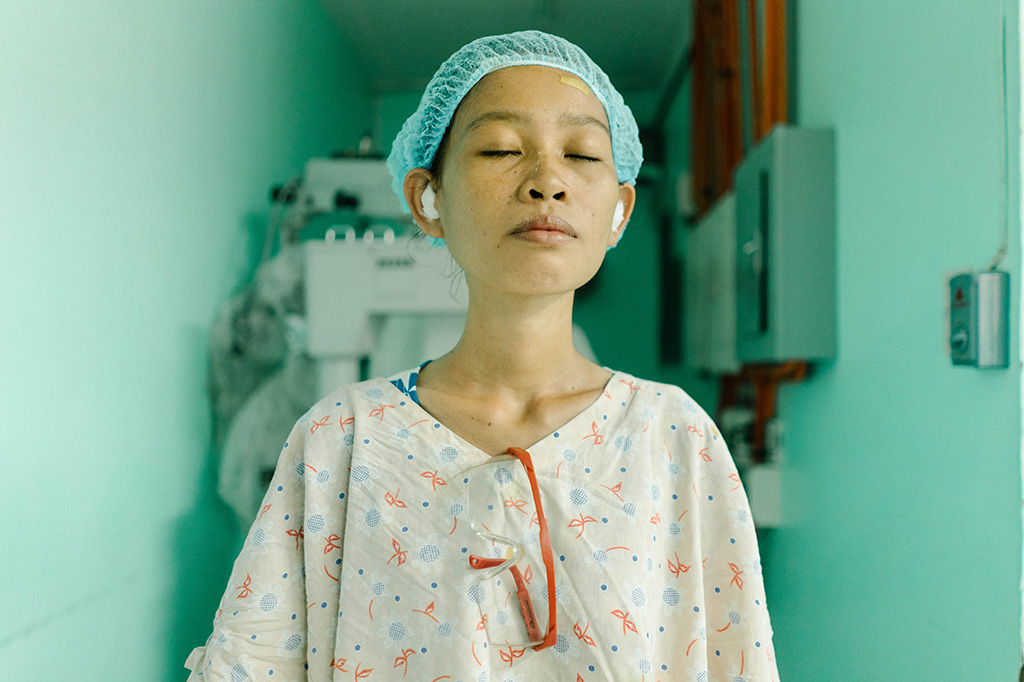
Since 1974, SEE has worked diligently around the world to reduce the number of people impacted by refractive error issues. Our network of volunteer surgeons provide free treatment to thousands of patients every year, as well as skill-sharing and training on appropriate surgical techniques to help strengthen local health care infrastructure worldwide.
Normally, images will be focused clearly on the retina at the back of the eye. However, if the lens in the eye is too thin or the eye is too short the focal point for the eye is too long, and this misalignment often causes vision problems.
(Source: Ferris, 2015)
There are 4 common types of refractive error:
(Source: National Eye Institute, 2022)
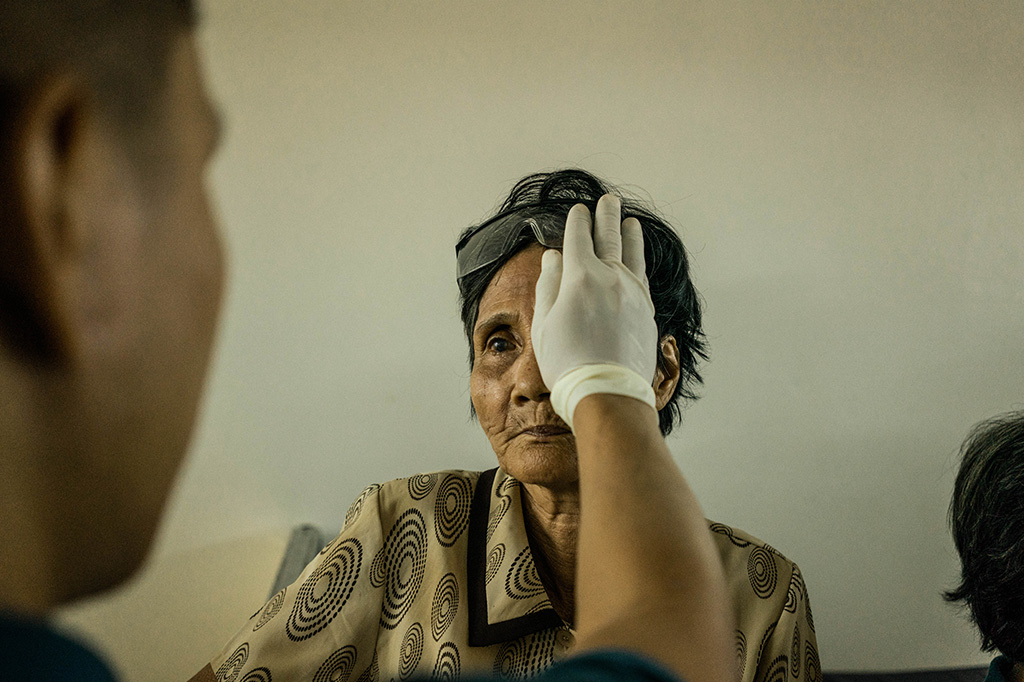
According to the World Health Organization, unaddressed refractive error is the second leading cause of untreated vision impairment, affecting 123 million people globally.
(Source: World Health Organization, 2019)
Uncorrected refractive errors are the main cause of vision impairment
Anyone can have refractive errors, but you’re at higher risk if you have family members who wear glasses or contact lenses.
Most types of refractive errors, like nearsightedness, usually start in childhood. Presbyopia is common in adults ages 45 and older.
(Source: National Eye Institute, 2022)
The most common symptom is blurry vision. Other symptoms include:
(Source: National Eye Institute, 2022)
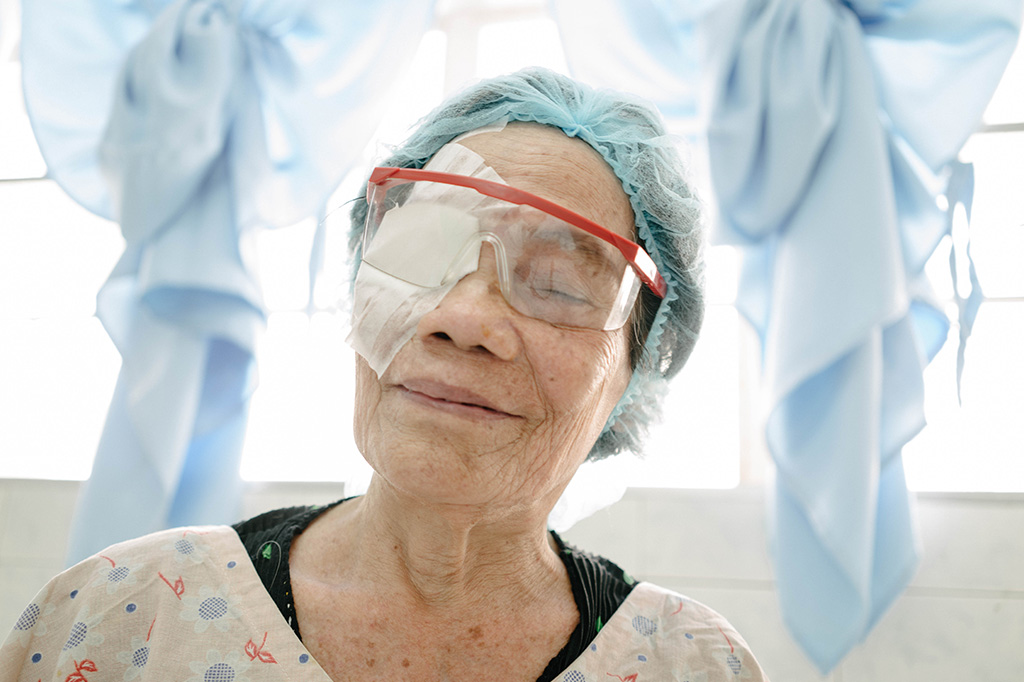
According to the World Health Organization, an estimated 153 million people live with visual impairment due to uncorrected refractive errors.
That’s why diagnosing and treating refractive error right here in the U.S. is another one of our organization’s main focuses. Since the 1980s, our Santa Barbara Vision Care Program has provided free comprehensive eye exams and glasses to individuals who would otherwise not be able to access care. SEE also partners with organizations and doctors to provide free comprehensive eye exams to those in need, helping to reduce the number of uncorrected refractive error cases across the U.S.
Since the 1980s, our Santa Barbara Vision Care Program has provided free comprehensive eye exams and glasses to diagnose and treat to individuals who would otherwise not be able to access care.
SEE also partners with organizations and doctors to provide free comprehensive eye exams to those in need, helping to reduce the number of uncorrected refractive error cases across the U.S.
Blurry vision can be either temporary or permanent, depending on the underlying cause. Temporary causes include eye strain, dry eyes, fatigue, or temporary medication effects. Permanent, or progressive, vision loss may result from conditions like cataracts, glaucoma, macular degeneration, or diabetic retinopathy.
Yes. When people cannot see clearly because their eyes are not corrected, they may struggle in school or social situations, feel frustrated, and even experience lowered confidence and emotional stress.
No! Cataracts are generally considered more serious than typical refractive errors.
Children generally cannot outgrow, reverse, or naturally fix severe refractive errors like myopia or astigmatism. On the positive side, mild farsightedness (hyperopia) may improve as the eye grows.
Yes. When you donate to SEE International, your support helps provide free eye exams, glasses, and treatment to people who otherwise could not afford care.
Nonprofits like SEE International build sustainable eye care systems by training local doctors, supplying necessary equipment, and supporting eye care programs so they can continue to treat refractive errors independent of our short term visits.
Ignoring vision gaps means many people will continue to live with avoidable vision impairment from refractive errors. This will lead to reduced education, lower work productivity, and decreased quality of life for millions worldwide.