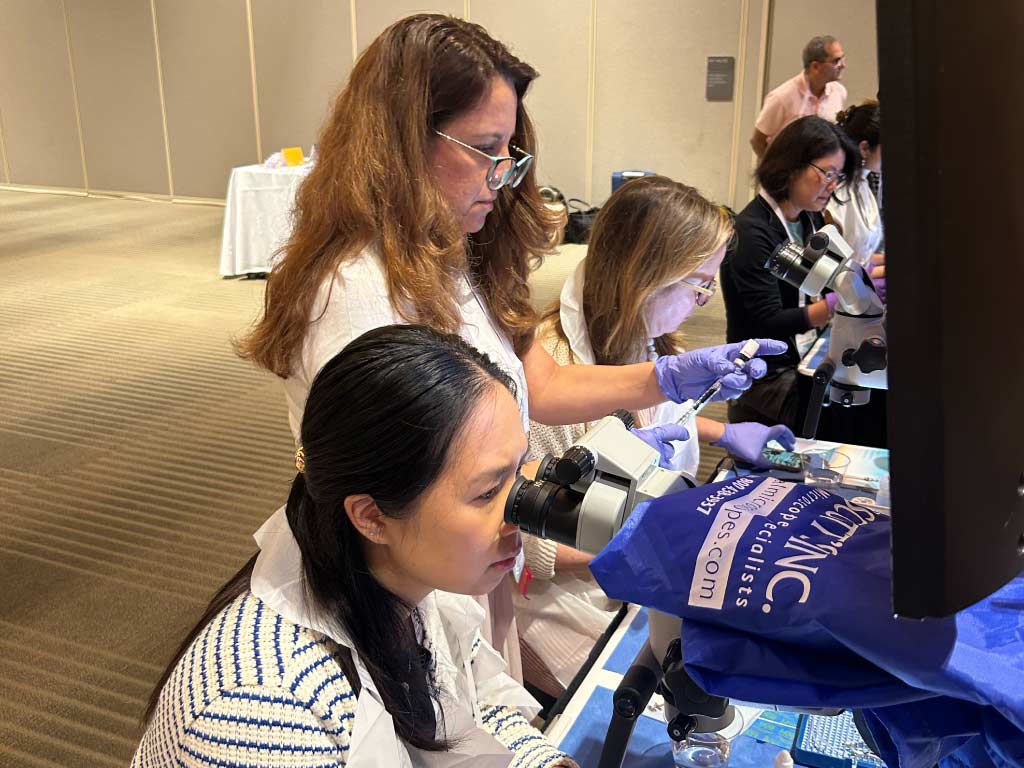


As 2026 draws to a close, we’re feeling grateful and hopeful. Thanks to our caring supporters, SEE International is on track for its biggest year yet: 80,000 sight-restoring surgeries worldwide.
Year-end is when many people make their most meaningful gifts. This year, several new federal tax rules take effect, so some familiar giving strategies work a little differently, and a few new ones are worth knowing about. Here are four tax-smart ways to support sight-restoring care before December 31, whether for yourself or to share with someone you know.
NOTE: This information is general, and tax rules can depend on your individual circumstances. Please consult your financial or tax advisor about what’s best for you.
What’s Different in 2026
Recent changes to federal tax law updated the charitable deduction rules beginning with the 2026 tax year. Three changes matter most for year-end donors:
- A new deduction for non-itemizers – You can now deduct some cash gifts even if you take the standard deduction.
- A new floor for itemizers – Only charitable gifts above 0.5% of your adjusted gross income (AGI) are deductible. For a household with an AGI of $200,000, the first $1,000 given in 2026 isn’t deductible, but everything above that is.
- A higher SALT cap – The cap on state and local tax (SALT) deductions rose to $40,400 for 2026 (with a phase-down at higher incomes), bringing itemizing back into reach for many households.
Sources: IRS, Working Families Tax Cuts provisions; IRS Publication 505 (2026)
With those changes in mind, here’s how to make your year-end gift go further.
1. Deduct Cash Gifts Even If You Don’t Itemize
Even if you take the standard deduction, the new rules allow you to deduct up to $1,000 ($2,000 for married couples filing jointly) for cash donations made directly to public charities like SEE International.
- Who it’s for – Anyone who takes the standard deduction, which includes most households.
- Good to know – The gift must be cash (a check, credit card, or online donation) made directly to a charity. Gifts to a donor-advised fund and donations of stock or goods don’t qualify for this deduction.
Sources: IRS News Release IR-2026-135; IRS Publication 6196, Charitable Contribution Deduction Tips for Non-Itemizers
2. Give From Your IRA (Qualified Charitable Distribution)
If you’re 70½ or older, you can make a tax-free gift of up to $111,000 in 2026 directly from your IRA to SEE International. Married couples who each have their own IRA can each give up to that limit.
- Counts toward your RMD – A Qualified Charitable Distribution (QCD) can satisfy all or part of your Required Minimum Distribution.
- Lowers your taxable income – QCDs are excluded from taxable income whether or not you itemize, and they aren’t affected by the new 0.5% floor.
- Good to know – The funds must go directly from your IRA custodian to the charity. QCDs can’t be made to a donor-advised fund.
Because IRA custodians get busy in late December, we recommend starting your request by mid-December so funds arrive by December 31.
Sources: IRS Notice 2025-67, Internal Revenue Bulletin 2025-49; IRS Publication 590-B
3. Donate Appreciated Stock
With the higher SALT cap making itemizing worthwhile again for many households, gifting long-term appreciated stock remains one of the most tax-efficient ways to give.
- Avoid capital gains tax – When you donate stock you’ve held for more than a year, you may avoid paying capital gains tax on its growth.
- Deduct the full value – If you itemize, you may be able to claim a deduction for the stock’s fair market value.
Simple transfer instructions are available on our Donate Stock page.
Sources: IRS Publication 526, Charitable Contributions; IRS Publication 505 (2026)
4. Recommend a Grant Through a Donor-Advised Fund
If you already have a donor-advised fund (DAF), you can recommend a year-end grant to support SEE International’s sight-restoring work.
If you’re considering itemizing this year, contributing to a DAF can also help you “bunch” several years of giving into 2026. Bunching can help you clear the standard deduction, and because the 0.5% floor applies every year you itemize, it also means the floor reduces your deduction once instead of year after year. For example, at an AGI of $200,000, giving $5,000 in each of two years loses $1,000 of deduction each year ($2,000 total). Giving $10,000 in one year loses $1,000 just once.
Sources: IRS, Donor-Advised Funds; IRS Publication 505 (2026)
Plan Ahead for December 31
To count for 2026, gifts need to be completed by December 31. A few timing tips:
- IRA gifts – Start your request by mid-December.
- Stock gifts – Transfers can take several business days, so begin early and let us know the gift is coming so we can identify it.
- Checks – Checks postmarked by December 31 count toward 2026.
Source: IRS Publication 526, Charitable Contributions
A Quick Note About Your Situation
This information is general, and tax rules, including the new deduction thresholds for itemizers, can depend on your individual circumstances. We encourage you to consult your financial or tax advisor about what’s best for you.
Questions? We’re Here to Help!
If you have questions or would like sample transfer instructions to share with your advisor, please contact our development team at development@seeintl.org. We’d be delighted to help.
Thank you for standing with us and helping people experience the life-changing gift of sight. Warmest wishes for a joyful holiday season!